This piece is part of IFP’s Transit Abundance Playbook, a collection of proposals for reducing American transit construction costs.
Summary
When voters approve transit projects by ballot initiative, their vote is meant to be decisive: the public has decided a new transit project is worth building. But procedural requirements such as environmental review can add years of delay and massive additional costs after transit has been approved by voters.
Laws like the National Environmental Policy Act (NEPA) and its state-level equivalents were designed to protect the environment by mandating procedures that make potential environmental consequences known before the government acts. But procedural requirements are not always the best tool for that job. Democratically approved transit projects already fulfill NEPA’s core goals — environmental protection, public involvement, and agency evaluation — without the need for reviews that add risk and cost. Because ballot measures engage the public in considering trade-offs, and delaying pollution-reducing transit infrastructure is itself an environmental harm, further procedure is redundant. Congress should exempt democratically approved transit projects from NEPA, or limit NEPA alternatives analysis when voters have chosen a transit route. Doing so would accelerate transit project delivery so both citizens and the environment can benefit from these projects in years rather than decades.
Problem
California’s High-Speed Rail project was approved by voters in 2008. The ballot measure directed the state’s High-Speed Rail Authority to “initiate the construction of a high-speed train system that connects the San Francisco Transbay Terminal to Los Angeles Union Station and Anaheim” and specified that it be “consistent with the Authority’s certified environmental impact reports of November 2005 and July 9, 2008.” After 18 years and 100,000 pages of additional Tier II environmental review — produced at a direct cost exceeding $750 million — the project has become the highest-profile example of America’s inability to build large-scale projects. This failure mode is not unique to California: Austin’s Project Connect light rail plan required 16,335 pages of environmental review, or 1,667 pages per mile of track. Voters approved the system in 2020, but the project did not receive federal approval until 2026, and construction is not expected to begin until 2027.1 By contrast, Madrid added 127 miles and 157 stations to its metro in 12 years, and a four-mile extension required a mere 19-page environmental assessment.
The delays and cost overruns that have plagued American transit projects are largely due to the adversarial environmental review process created by NEPA. Environmental reviews are vulnerable to lawsuits by project opponents because the scope and depth of review are not well-defined: a project opponent can always sue over some impact that they believe should have been studied in greater depth, or an alternative that should have been considered but wasn’t.2 The rising cost and duration of environmental review is partly due to agencies’ understandable desire to make their reviews as litigation-proof as possible, rather than to address genuine environmental concerns. And while most NEPA lawsuits are ultimately unsuccessful, they can nonetheless cost millions and cause years of delay.
NEPA and its state-level counterparts (often known as “mini-NEPAs”), such as the California Environmental Quality Act (CEQA) or New York’s State Environmental Quality Review Act (SEQRA), were designed to achieve three primary goals: environmental protection, public involvement, and informed agency decision-making. Yet as foundational Supreme Court cases like Robertson v. Methow Valley Citizens Council established, NEPA is a procedural statute: it requires agencies to follow certain procedures, but so long as they do, they can take action freely, regardless of the harmful (or beneficial) effect on the environment. As the Court found, NEPA “merely prohibits uninformed — rather than unwise — agency action.”
Procedural requirements like these are not the only (or even best) way to achieve NEPA’s substantive goals. Voter-approved transit projects can meet the high-level goals of NEPA without following procedures that add years and billions of dollars to the delivery of transit projects that the public has already decided they want built.
A primary goal of NEPA is fostering a “productive harmony” between humans and nature and ensuring agencies do not unknowingly harm the environment.3 But the delays NEPA creates carry their own tangible environmental harms. Transit projects reduce pollution and traffic congestion; they enable people to live closer to one another, and preserve natural habitats that would otherwise be swallowed by sprawl and highways.4 Adding years of cost-prohibitive studies delays infrastructure projects and can ultimately inflict harm on the environment in the name of protecting it.
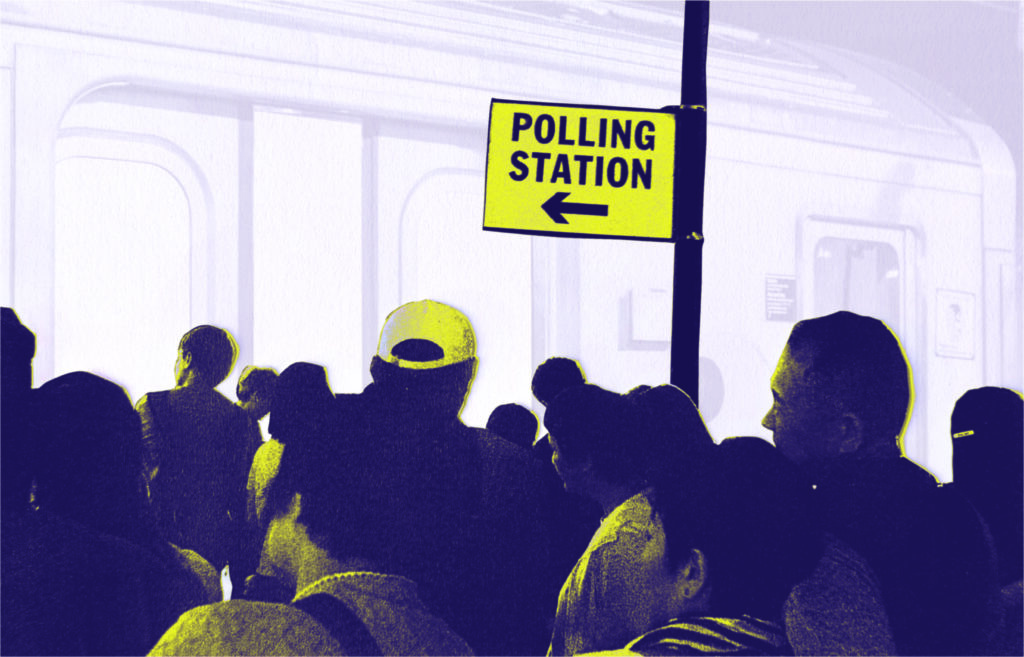
NEPA also seeks to ensure that the public and federal decision-makers understand the environmental consequences of their actions before they act. But for voter-approved transit projects, this public information goal is less important not only because of transit’s known positive environmental consequences, but also because it can be partly met by the electoral process itself. Referendums engage far more of the public than NEPA’s bureaucratic process does; through media scrutiny and public debate, the electoral process allows the public as a whole to weigh a project’s costs and benefits before making a decision.
Major federally funded transit projects are already subject to an extensive and reasoned agency decision-making process. The Federal Transit Administration (FTA) thoroughly evaluates projects through its Capital Investment Grants (CIG) review process, which explicitly considers environmental benefits as a project justification criterion. Moreover, both FTA and transit agencies must comply with substantive environmental laws like the Clean Air Act, the Clean Water Act, and the Endangered Species Act, which better target environmental impacts than a procedural statute can.
Subjecting voter-approved projects to NEPA review ultimately leads to delay and even risk of failure. Project delays increase costs, create political liabilities for policymakers, and deepen public cynicism about transit agencies’ ability to deliver — all while foregoing years of reduced emissions, pollution, and traffic congestion.
Solution
Congress should exempt voter-approved transit projects from NEPA — or, failing that, from its alternatives analysis requirement — provided the underlying ballot measure meets baseline standards for feasibility, cost, and projected benefits. States should do the same for their mini-NEPAs.
Exempt projects from environmental review
To honor the will of the voters, Congress should define a standard for voter-approved transit projects and establish that such projects are not major federal actions under NEPA. Congress should also amend the CIG statute to make NEPA compliance consistent with the new exemption.
An exemption would allow transit planners to move quickly from ballot approval to technical planning and consideration for CIG funding, culminating in a Full Funding Grant Agreement with FTA. Relief from NEPA would also free up transit agency capacity to focus on the technical details of project planning and construction, rather than being burdened with procedural documentation and litigation-proofing.5 Shortening the time between voter approval and construction would ultimately lower project costs, speed up delivery, and help restore public trust.
There is recent precedent for exempting classes of projects from environmental review. Under the Building Chips in America Act, Congress exempted certain semiconductor manufacturing facilities from NEPA review to rapidly onshore critical supply chains and protect national security. When voters approve an environmentally beneficial transit project through a referendum, it should be given the same priority.
Limit NEPA’s alternatives analysis requirement
If a full NEPA exemption for transit is not possible, then Congress should, at a minimum, constrain the scope of NEPA reviews for these projects. More specifically, agencies evaluating voter-approved transit projects should not be required to analyze any alternatives beyond the specific project authorized by the ballot initiative.
NEPA requires an alternatives analysis, which entails a consideration of “a reasonable range of alternatives to the proposed agency action.” For transit projects, that can mean studies of different routes, different transit modes, and a “no-action” baseline.6 But when voters approve a specific transit project, they expect it to be built — not for the agency to analyze alternatives inconsistent with that approval. When a ballot measure dictates the mode, corridor, and scope of a new transit line, the transit agency executing voter will lacks the democratic legitimacy to build a fundamentally different alternative. Forcing an agency to spend additional money and time analyzing alternative alignments or modes that voters have implicitly rejected is unreasonable.
NEPA’s modern trajectory has already brought analysis of extraneous alternatives into question. While some early NEPA cases held that agencies had to evaluate alternatives beyond the scope of their own authority and CEQ’s 1978 regulations required NEPA reviews to include “reasonable alternatives not within the jurisdiction of the lead agency,” recent law has moved in the opposite direction.7 As amended by the Fiscal Responsibility Act of 2023, NEPA now requires “a reasonable range of alternatives to the proposed agency action” that are “technically and economically feasible” and “meet the purpose and need of the proposal.”8 The Supreme Court’s decision in Seven County Infrastructure Coalition v. Eagle County likewise emphasized that NEPA review should focus on the “project at hand,” not impacts or alternatives outside the agency’s authority or control. For voter-approved transit projects, Congress would therefore not be inventing a wholly new principle, but rather clarifying that alternatives other than those approved in a ballot initiative are not “feasible” or “reasonable” and thus need not be considered.
To be clear, either a full exemption from environmental review or a limit on the alternatives analysis requirement would only apply to procedural review under NEPA and state mini-NEPAs; these proposals would not exempt transit projects from substantive laws like the Clean Water Act and Clean Air Act. Transit projects would still be required to comply with state and federal safety and pollution standards. But a full NEPA exemption would remove the single largest procedural hurdle for transit construction, and an alternatives analysis limit would reduce the scope of a project’s review and the opportunities to challenge it in court. Both would reduce the risk that projects are held up simply to relitigate what voters have already decided.
Ensure informed decision-making
Congress should require a state to present voters with a ballot initiative proposal that meets minimum standards for feasibility, cost-benefit analysis, safety, and anticipated routing in order to qualify for a NEPA exemption. The proposal should demonstrate:
- Sufficient planning to prove project feasibility as proposed;
- A cost estimate and how the agency proposes to pay for its local financial commitment; and
- An estimate of project benefits, including ridership increases, improvements to access, and increased opportunity for transit-oriented housing.
While Congress should enumerate these general proposal elements, the level of specificity should be left to the state’s discretion; the voters are the ultimate arbiters of whether a project is sufficiently detailed, and they can vote down any project that lacks a good case. If a transit project proposal provides the enumerated elements and is approved by voters, the project is exempt from NEPA. States with mini-NEPAs should establish similar exemption criteria, and Congress and FTA could encourage state action by including a preference in federal transit grants for projects that will receive equivalent state-level streamlining.
Conclusion
Democratic input should be considered a suitable substitute for costly procedures. A NEPA carve-out for voter-approved projects would recognize that when the public has deliberated on a project and chosen to fund and build it, they have already taken the accountability that NEPA’s procedural requirements were designed to secure. Layering additional requirements on top of that process supplants, rather than improves, democratic voice.
By treating voter-approved transit projects as mandates and exempting them from NEPA review — or by limiting the scope of that review — policymakers can uphold NEPA’s goals of environmental protection and accelerate important transit projects. The federal government shouldn’t require a half-decade to take yes for an answer.
-
On average, it takes 5.7 years from the initial Notice of Intent for the Federal Transit Administration (FTA) to complete an Environmental Impact Statement (EIS), as measured from the data underlying Council on Environmental Quality’s 2025 report, "Environmental Impact Statement Timelines (2010–2024)." Although the review time for EISs was limited to two years by the Fiscal Responsibility Act of 2023, the statute also includes a provision that allows the lead agency to "extend such deadline, in consultation with the applicant" and does not require applicant consent for such extensions. See 42 U.S.C. § 4336a(g)(2).
-
For example, a federal judge temporarily blocked Maryland’s Purple Line on the grounds that the independent (and largely unrelated) Washington, DC metro system had seen declining ridership, which had little to do with the environment.
-
NEPA’s statutory language in 42 U.S.C. § 4321 expresses its goal as to “prevent or eliminate damage to the environment and biosphere and stimulate the health and welfare of man.”
-
By shifting travel away from personal vehicles, transit reduces carbon emissions and localized air pollutants — (including particulate matter and nitrogen oxides) — that are known to cause smog and drive respiratory diseases, and have harmful environmental and human health effects. Transit also improves water quality by reducing tire microplastics, motor oil, and brake dust that wash directly from roadways into streams. By minimizing the need for sprawling, impermeable asphalt parking lots, transit can enable natural water filtration and mitigate flash flooding, among a host of other benefits.
-
See Jamey Tesler’s playbook piece and Aidan Mackenzie’s playbook piece for more on the advantages of reducing NEPA burdens for transit projects.
-
See, for example, Natural Resources Defense Council v. Morton, 458 F.2d 827 (D.C. Cir. 1972); 40 C.F.R. § 1502.14(c) (1978).