This piece is part of IFP’s Transit Abundance Playbook, a collection of proposals for reducing American transit construction costs.
Summary
Section 13(c) of the Federal Transit Act conditions federal funding on a certification of labor protection from the Department of Labor. Originally enacted in 1964 to protect workers during the transition from private to public ownership of mass transit, the provision now blocks the modernization of transit operations: no legacy US heavy-rail system has automated its operations to permit trains to run without onboard crew. In contrast, countries like France and Canada, each with robust labor protections, automate without conflict.
Transit automation can drastically reduce operating costs and improve service, but the open-ended 13(c) certification process provides labor with an effective veto on such changes. Congress should reform this process and unlock automation by enumerating worker protections in statute, shifting the framework from preserving staffing models to protecting individual workers.
Problem
Transit automation promises cost and safety benefits, but the US has been slow to adopt it.
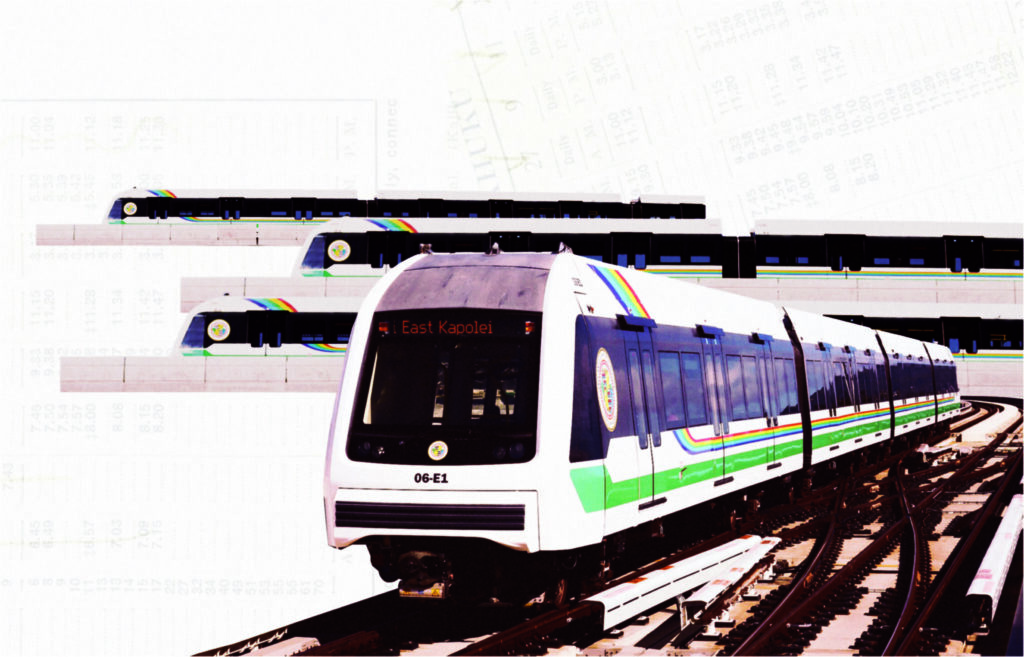
The International Association of Public Transport classifies four grades of train automation. The highest grade — Grade of Automation 4 (GoA4) — is unattended train operation, in which train movement, stopping, door operation, and disruption management are all controlled automatically, without a driver or attendant on board. This level of automation is proven and mature technology, deployed on more than 60 metro lines worldwide: Vancouver’s SkyTrain has operated without drivers since 1985, carrying over 150 million passengers annually; Honolulu’s Skyline opened in 2023 as a fully automated heavy rail system; and Paris retrofitted its busiest metro line — Line 1, which carries 725,000 riders daily — to full automation between 2007 and 2012, completing the project in one of the world’s strongest union environments without major labor conflict. These examples demonstrate that automation is technically viable, operationally safe and reliable, and achievable even where labor protections are robust.
Yet no legacy US heavy rail system has been retrofitted for full automation. Many legacy US systems already use automatic train control (ATC) technology that can operate trains without a driver — San Francisco’s BART trains have run under automatic control since the system opened in 1972, and WMATA’s trains in the DC-Maryland-Virginia region are similarly automated. But no legacy system has removed onboard operators and transitioned to unattended operation. Neither BART, nor WMATA, nor the MTA in New York City have pursued it, despite decades of consideration.1
Transit automation is a well-understood engineering task. Building a new automated system is straightforward; dozens of cities have done so, including several in America. The harder engineering challenge is retrofitting an existing system, which requires converting a line with legacy signals, infrastructure, and operating procedures to run unattended, all without interrupting service. This is complex and costly, with anticipated expenses running in the hundreds of millions of dollars.
Transit is extraordinarily labor-intensive, so foregoing automation is a missed opportunity for substantial cost savings and service improvement. According to the American Public Transportation Association, driver and other labor compensation accounted for 59% of transit operating costs in 2025. Moreover, a national staffing shortage has forced agencies to cut service even if they have the funding to support it.
One recent study found that automation could reduce US rail transit operating costs by up to 46%, generating an operational profit on the New York and Philadelphia subways, the Boston T’s Red, Blue, and Orange lines, the BART system in the San Francisco Bay Area, and Caltrain. This estimate is likely too optimistic: it benchmarks US systems against Copenhagen’s (which was purpose-built for automation and operates under a different labor regime) and Vancouver’s, and fails to factor in the substantial upfront capital investment that automation requires, including new signaling systems and automated control centers alongside the platform screen doors that typically accompany modern automation projects. But even a conservative reading of the evidence suggests that automation offers transformative savings. The MTA’s New York City Transit alone spends nearly $1 billion annually on train operator and conductor compensation.2 As the Paris Line 1 retrofit demonstrated, eliminating those positions would generate savings that repay the capital investment over time, even accounting for added costs for new maintenance and supervisory roles.
For several US rail systems, including those in New York, Philadelphia, and the San Francisco Bay Area, automation could close the gap between fare revenue and operating costs. This would help agencies reach (or approach) operational self-sufficiency, a threshold that no legacy US heavy-rail system currently meets.
Automation can improve system safety and service frequency. Automated systems allow for platform screen doors, creating barriers between the platform and the track that open only when a train is correctly positioned. Platform screen doors virtually eliminate track-fall and platform-edge fatalities, which account for a significant share of subway-related deaths, but they require the precise, repeatable stopping accuracy that automated train operation facilitates. Automated systems can also run at shorter headways (some automated metros sustain intervals between trains as short as 90 seconds) and extend service hours without proportional cost increases.
It’s not that American transit agencies are unaware of the advantages of automation. Nor can the automation gap be explained by safety rules, procurement practices, or agency caution, which also exist in jurisdictions that have automated successfully. Vancouver operates under Canadian safety standards, which are comparable to those of the US, and has maintained an exemplary safety record over nearly four decades of automated operation; Paris operates under French labor law, which offers workers stronger protections than American law does. Both cities automated their systems anyway.
What distinguishes the United States is a federal funding condition: Section 13(c) of the Federal Transit Act, codified in 49 U.S.C. § 5333(b). The provision requires that any federally funded project that would eliminate positions, change job classifications, reduce hours, or reassign workers secure Department of Labor certification that the changes are “fair and equitable” to affected employees. This open-ended, opaque certification process creates uncertainty that deters agencies from proposing potentially beneficial changes. In practice, it ties federal funding to the effective preservation of existing staffing models, making automation of legacy systems infeasible.3
Section 13(c) specifies several categories of required protection: preservation of rights, privileges, and benefits under existing collective bargaining agreements; continuation of collective bargaining rights; protection of individual employees against a worsening of their positions with respect to employment; paid training or retraining programs; priority of reemployment of affected employees; and paid relocation expenses. Most transit agencies satisfy this requirement by adopting the National (Model) Agreement, a template developed by the Department of Labor and agreed to by the major transit unions, which implements these protections as binding contractual terms. The model agreement is broad in scope — it explicitly covers “any changes, whether organizational, operational, technological, or otherwise, which are a result of the assistance provided,” so any project that affects staffing, including automation, triggers the certification requirement.4 Unions have invoked this language to challenge projects that threatened existing job classifications, even when the projects had nothing to do with automation.
Both the requirements and the certification process are opaque. The statute does not precisely define “fair and equitable,” and the Department of Labor has issued procedural regulations (29 C.F.R. Part 215) governing the certification process, but has never issued binding regulations defining which arrangements qualify. The Secretary of Labor exercises broad discretion over each certification, with no published rationale or binding precedent to guide future applicants. As the Transportation Research Board’s guide to Section 13(c) notes, certification letters “are not drafted like legal opinions,” and “the guidance provided by certification letters can be of limited value” because the rationale is often absent. Although the Department of Labor has since made some certification letters available as a result of the Freedom of Information Act, the fundamental opacity persists: there is no compiled index, systematic publication of reasoning, or binding precedent. This opacity is itself the constraint: agencies cannot predict which protections will be required, so they cannot confidently plan projects that might trigger the requirement.
The statute imposes no deadline for certification, and while the Department’s procedural regulations establish nominal timeframes, including up to 30 days of negotiation and a five-day window for certification thereafter, these are not mandatory and do not resolve the substantive uncertainty about which protections will satisfy the standard. As a result, a union objection can stall the certification process. The process gives labor an asymmetric advantage: delay comes at a cost to the agency, which needs the federal funds, but not to the union, which does not. The resulting leverage is sufficient to deter agencies from proposing changes, even though it does not amount to a formal veto.
Section 13(c) was enacted in 1964. At that time, public agencies were acquiring failing, privately held transit systems across the country. Public-sector collective bargaining protections were weak and uneven, and labor leaders were justifiably concerned that public takeover would void the protections workers had fought to achieve under private ownership. The provision addressed this concern by guaranteeing that federal assistance could not be applied to projects that would make any worker worse off.
This was intended to be a transitional provision, and Congress expected its assistance to public operators to be a one-time intervention.5 But transit became permanently subsidized, and federal assistance expanded from capital grants to operating subsidies.6 Even as Section 13(c) remained unchanged in statute, its practical scope expanded dramatically. What began as transitional protection has evolved into a standing condition.
Section 13(c) does not distinguish between protecting workers and protecting jobs. A provision intended to protect workers would ensure that no individual is made worse off by a staffing change, whether through redeployment, effective retraining, generous severance, or voluntary early retirement. Section 13(c) strays from that stated intent and, in practice, prevents staffing changes altogether. As a result, agencies are reluctant to modernize operations, even when they are willing and able to make displaced workers whole.
The case of Miami’s Metromover illustrates this dynamic. When Miami replaced bus lines with a new automated downtown circulator in 1986, the Section 13(c) agreement guaranteed existing bus operators whose routes were displaced positions on the Metromover as technicians or station monitors, rather than offering severance or early-retirement packages. The system opened without layoffs, but Miami-Dade’s own 2001 review found that the Metromover ended up with surplus staff relative to its scale, contributing to an unusually high cost per rider. Section 13(c) permitted automation only because it augmented the workforce with excessive staff; that augmentation outlasted the workers it was designed to protect. While Section 13(c) protective agreements typically guarantee individual workers’ positions for a defined period rather than permanently, the procedural burden of modifying staffing levels, which would itself require new certification, means that the additional positions tend to persist indefinitely.
The provision has consequences beyond hampering automation. In 1980, the Lane Transit District in Eugene, Oregon, sought federal funds to rehabilitate aging buses. The Amalgamated Transit Union (ATU) local objected, arguing that contracting out the rehabilitation work would worsen the position of its mechanics. The Department of Labor withheld certification, and the project was delayed and eventually rescoped to satisfy union demands, at a cost the transit district estimated at $500,000 in forgone savings.
Beginning in 2013, the Department of Labor argued that California’s Public Employees’ Pension Reform Act (PEPRA), which reduced pension benefits for newly hired public employees (including transit workers), constituted harm under Section 13(c). PEPRA was not a transit-specific measure: it was a universal reform that applied equally to all new employees. Yet because transit workers were among those affected, the statute tripped 13(c), and no mechanism existed to quickly dismiss the claim. A federal court ultimately rejected the Department of Labor’s argument, but only after proceedings that spanned nearly a decade and created years of funding uncertainty for California transit agencies. The statute did not work as intended here; it was stretched well beyond its original scope, and its design ensured that a claim entirely unrelated to transit operations imposed the same costs as one specifically bearing on transit workers’ rights.
These cases illustrate the statute’s practical effect: any change that can arguably worsen any worker’s position triggers a discretionary and opaque certification process in which the union has asymmetric leverage to impose delay, creating a risk that most transit agencies choose not to accept. Repeated conditioning has discouraged agencies from proposing changes that could trigger extended negotiations and jeopardize their federal funding. The result is stasis.
This is not a matter of bad faith. The statute’s design — its broad scope, opaque standards, lack of deadlines, and asymmetric costs — discourages positive-sum transit improvements, even when all parties act in good faith within the framework they have been given.
The strongest evidence that Section 13(c) is the binding constraint on better transit is that automation proceeds where the provision does not apply. Honolulu’s Skyline was able to launch fully automated because it was a new-start project with no legacy workforce to trigger 13(c). Airport people movers, which receive federal funding through the FAA rather than the FTA and therefore fall outside the scope of Section 13(c), have operated without drivers for decades. But retrofitting existing systems — where the largest savings lie — remains off the table.
Solution
Congress can remove this barrier and unlock the benefits of automation, while maintaining the worker protections that Section 13(c) was initially intended to ensure. To achieve this, Section 13(c) should be amended to distinguish between protecting workers and preserving specific jobs, replacing the discretionary, open-ended certification process with enumerated statutory standards that provide certainty to both agencies and labor.
Paris offers a model for such reform. When Paris transit operator RATP decided to automate Metro Line 1 in 2004, approximately 250 train operator positions were to be eliminated. Line 1 was the system’s oldest and busiest line, with 725,000 daily riders and a workforce represented by some of France’s most militant unions. Nonetheless, the project was completed on schedule in 2012, without layoffs, and through a process that RATP described as “without major conflict.” Miami had missed an opportunity for cost savings by reassigning displaced workers to new positions on the automated system itself; RATP instead redeployed operators to other lines within its network, retaining the workers without inflating staffing on the newly automated line.
RATP succeeded by negotiating a structured redeployment agreement with unions before automation began. The 2007 framework agreement (protocole d’accord) between RATP and the majority union established the following terms:
- 200 drivers were redeployed to other Metro lines within the RATP network, each retaining pay, benefits, and civil-service status;
- 42 drivers received training to become supervisors in the new automated control center, roles with higher skill requirements and higher pay; and
- An immediate hiring freeze was implemented on Line 1 driver positions at the outset of the project, reducing the number of operators that needed to be redeployed.
Moreover, RATP anticipated that converting a line that runs for 20 hours per day would take approximately five years to complete, during which retirements would naturally reduce the headcount.
The unions representing most of the affected workers were on board. The CGT, France’s most militant transit union, notably refused to sign; its leadership argued that automation was partly motivated by a desire to reduce union strike leverage, since a driverless line cannot be shut down by drivers walking off the job. In the United States, where strikes are less common (and where public transit strikes are restricted or prohibited in the majority of states), this concern is less relevant; the binding constraint on automation is not union strike leverage but the regulatory leverage that Section 13(c) provides.
CGT’s refusal did not block the project. French labor law permitted RATP to proceed with majority union support, and no major strikes against automation materialized. Years after Line 1’s conversion was complete, even the CGT’s position evolved: its representatives now acknowledge the Line 1 template as the standard, insisting that future automation projects replicate its worker protections. For its part, the transit operator RATP found that automation provided rapid payback, with annual operating savings from approximately 250 eliminated driver positions substantially exceeding the one-time transition costs of redeployment, retraining, and severance. RATP has not published precise payback figures, but initially expected costs to be amortized over ten years. And automation ultimately improved transit service for the public: Line 1’s peak headways fell from 105 seconds to 85 seconds, among the shortest in the world.
RATP’s successful automation of Line 1 demonstrates that automation and robust worker protection are compatible if agencies and workers establish clear, predictable terms. Congress could amend 49 U.S.C. § 5333(b) to replace the open-ended Department of Labor certification with enumerated statutory protections for transitioning workers. These standards would apply in advance rather than being determined through case-by-case negotiation, enabling agencies to plan accordingly and meet enumerated labor protection requirements to secure project approval.
The statutory standards could include severance payments calculated by years of service, paid retraining for equivalent or higher-skilled positions, priority placement in other positions within the agency, early retirement options for workers near retirement age, and voluntary separation packages. Protection would attach to the worker, not to the continued existence of a particular position. Systems like WMATA and the MTA, which already operate automated trains with onboard staff, could then take the next step of removing those operators and providing redeployment, retraining, and severance protections specified by statute. Amendments should also set a statutory timeline: an agency that complies with the enumerated standards should receive certification within a specified timeframe, such as 180 days. If the agency meets the statutory criteria, federal funds could not be withheld on Section 13(c) grounds.7
Reform would mitigate the current process’s uncertainty while preserving Section 13(c)’s underlying commitment to worker protection. Transit agencies could plan automation projects knowing, in advance, which labor obligations they must satisfy. Compliance would be assessed against clear criteria rather than determined through extended negotiation, and the uncertainty that currently makes automation infeasible — uncertainty about whether any compensation package would satisfy the Department of Labor — would be eliminated.
Beyond statutory reform to 13(c) procedures, there is a second path that does not require congressional action. The Department of Labor could reduce uncertainty through administrative reform: publishing interpretive guidance on what constitutes “fair and equitable” arrangements, committing to process certifications within a stated timeframe, and systematically publishing the rationale behind certification decisions. These steps would not change the statute, but they would give transit agencies the predictability they currently lack. This change could be implemented by executive action alone.
Section 13(c) was a rational solution to a 1960s problem: protecting transit workers who lacked public-sector bargaining rights during a one-time wave of public acquisitions. Today, defenders of Section 13(c) argue that it provides a necessary federal floor in states with weak labor protections and that it ensures continued union support for federal transit appropriations. But statutory reform could preserve meaningful worker protections while removing procedural obstacles to better transit. The status quo of stalled modernization, high operating costs, and poor service for riders is not a necessary cost of protecting workers, especially while agencies struggle to fill existing roles. Paris’s experience is instructive: French transit workers enjoy strong labor protections, and RATP’s automation proceeded without layoffs and without a Section 13(c)-style certification process, resulting in enhanced transit and the same (or better) jobs.
American transit systems spend billions of dollars each year compensating operators for functions that technology can perform more safely and more reliably. Statutory reform or administrative action would unlock substantial benefits: lower operating costs, better service frequency, enhanced system safety, and reduced dependence on taxpayer subsidies. Any of these approaches would begin to close the automation gap that Section 13(c) has created. Riders who depend on these systems, and taxpayers who subsidize them, deserve the modernization that Section 13(c) has blocked for decades.
Further reading
- John G. Kilgour, “The Impact of Section 13(c) of the UMTA on Labor-Management Relations at BART,” Transportation Law Journal, 1978.
- Marc Scribner, “An Outdated Federal Law Prevents Transit Automation,” Reason, 2024.
- Chetan Sharma and Joseph Y. J. Chow, “Reducing US Transit Costs: An Empirical Review and Comparative Case Study of Portland, Manchester Rail Systems,” New York: C2SMART Center, 2023.
- U.S. Department of Labor, “National (Model) Agreement Pursuant to Section 13(c) of the Urban Mass Transportation Act of 1964, as Amended.”
- U.S. General Accounting Office, “Employee Protection Agreements under the Urban Mass Transportation Act of 1964,” 1982.
- G. Kent Woodman, Jane Sutter Starke, and Leslie D. Schwartz, “Transit Labor Protection—A Guide to Section 13(c) of the Federal Transit Act,” TCRP Legal Research Digest, 1995.
-
BART’s system was designed for driverless operation when it opened in 1972; the addition of onboard operators was a labor concession, as per Kilgour (1978) . WMATA's Metrorail similarly incorporated automatic train operation capability from its 1976 opening. The MTA began piloting Communications-Based Train Control on the L train in 2000, a necessary precursor to full automation, and has discussed removing operators since at least the 1990s.
-
See the Federal Transit Administration, National Transit Database, 2023 Annual Data — Operating Expenses by Object Class , MTA New York City Transit (NTD ID 20008), Heavy Rail mode. Operator wages and operator paid absences total $553.7M; applying operators’ proportional share of total wages and absences (~19.8%) to the agency's $1.95B in reported benefits yields an additional estimated $385M, for a total compensation estimate of approximately $939M.
-
Although this piece focuses on rail, where automation is technologically mature and internationally proven, Section 13(c) applies to federally funded transit projects across modes, including bus systems, and constrains automation-related staffing changes wherever it applies. Bus-based automation seems particularly promising, given a heavy-rail train needs one operator to move more than a thousand passengers, while a bus requires one driver for at most 100, and typically many fewer. Driving-automation technology is not yet robust enough for wide application to buses, but automation of ridehail vehicles and transport trucks is proceeding quickly and safely where regulators allow it; it is reasonable to expect bus automation to be feasible soon (i.e., within years rather than decades).
-
Some larger agencies with established unions negotiate project-specific protective arrangements rather than adopting the Model Agreement. In these cases, the Department of Labor certifies the project based on the individually negotiated terms.
-
The 1964 Urban Mass Transportation Act was framed as emergency assistance to rescue failing private transit operators. Section 13(c) initially applied only to capital grants. Its scope expanded substantially when the National Mass Transportation Assistance Act of 1974 extended federal transit assistance to operating subsidies, subjecting a far broader range of projects to labor certification. See GAO/HRD-82-50 (1982), 1–3.
-
Federal transit operating assistance is provided primarily through the Urbanized Area Formula Grants program (49 U.S.C. § 5307). Section 13(c) applies to all federal transit assistance under Chapter 53 of Title 49, whether capital or operating, meaning that the certification requirement attaches to both discrete capital projects and routine annual formula grants.
-
Federal transit assistance may be withheld on other grounds, such as noncompliance with Title VI of the Civil Rights Act, the Americans with Disabilities Act, or the National Environmental Policy Act, but these conditions are separate from the Section 13(c) certification requirement and would be unaffected by this proposed reform.